


Dominika Kuźma-Ebel
What’s Playing Next Door? A Few Threads from Contemporary Polish Music

If you listen to both Czech and Polish playlists long enough, you eventually stumble across moments where the two scenes almost accidentally mirror each other. Take Viktor Sheen’s “Stíny” and White 2115’s “18”—at first listen, it feels like a shared sample or a coincidence of mood, until you realize the Polish track practically lifts the motif one-to-one, right down to the phone-call atmosphere. It is a small, slightly cheeky detail, yet a fitting starting point for looking at contemporary Polish music: a scene that lives right next door to the Czech one, draws from the same internet-era pool of sounds, and yet operates on a scale and emotional temperature that feel distinctly its own.
Across the Border: Inside Poland’s Long Battle Over Abortion
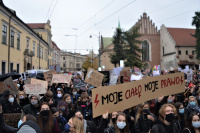
In Czechia, ending a pregnancy on request is a straightforward medical procedure governed by a 1986 law with later updates. Available up to the 12th week of pregnancy, it is open not only to Czech residents, but—since the country joined the European Union in 2004 and aligned with EU rules on freedom of movement and cross-border healthcare—also to people traveling from other member states. A pregnant person simply submits a request to a doctor, goes through a standard consultation, and receives a referral to a clinic where the procedure can be performed. For many women living in southern Poland, Czechia is just a short drive away—and a stark contrast to what awaits them at home.
O portálu
Zpravodajsko-publicistický portál Pres.UPmedia.cz je cvičným médiem, prostorem pro tvorbu studentů oboru Žurnalistika na Katedře mediálních a kulturálních studií a žurnalistiky Filozofické fakulty Univerzity Palackého v Olomouci.